Production / Local Energy

Clean, local electricity where resilience matters

Velox enables on-site energy generation through Aeroleaf micro-wind systems and hybrid WindTree infrastructure. The objective is simple: produce electricity where it is actually used, reduce exposure to fragile energy systems, and create a visible path toward lower-carbon operations.

Aeroleaf micro-generation Hybrid WindTree range ESG-ready contribution
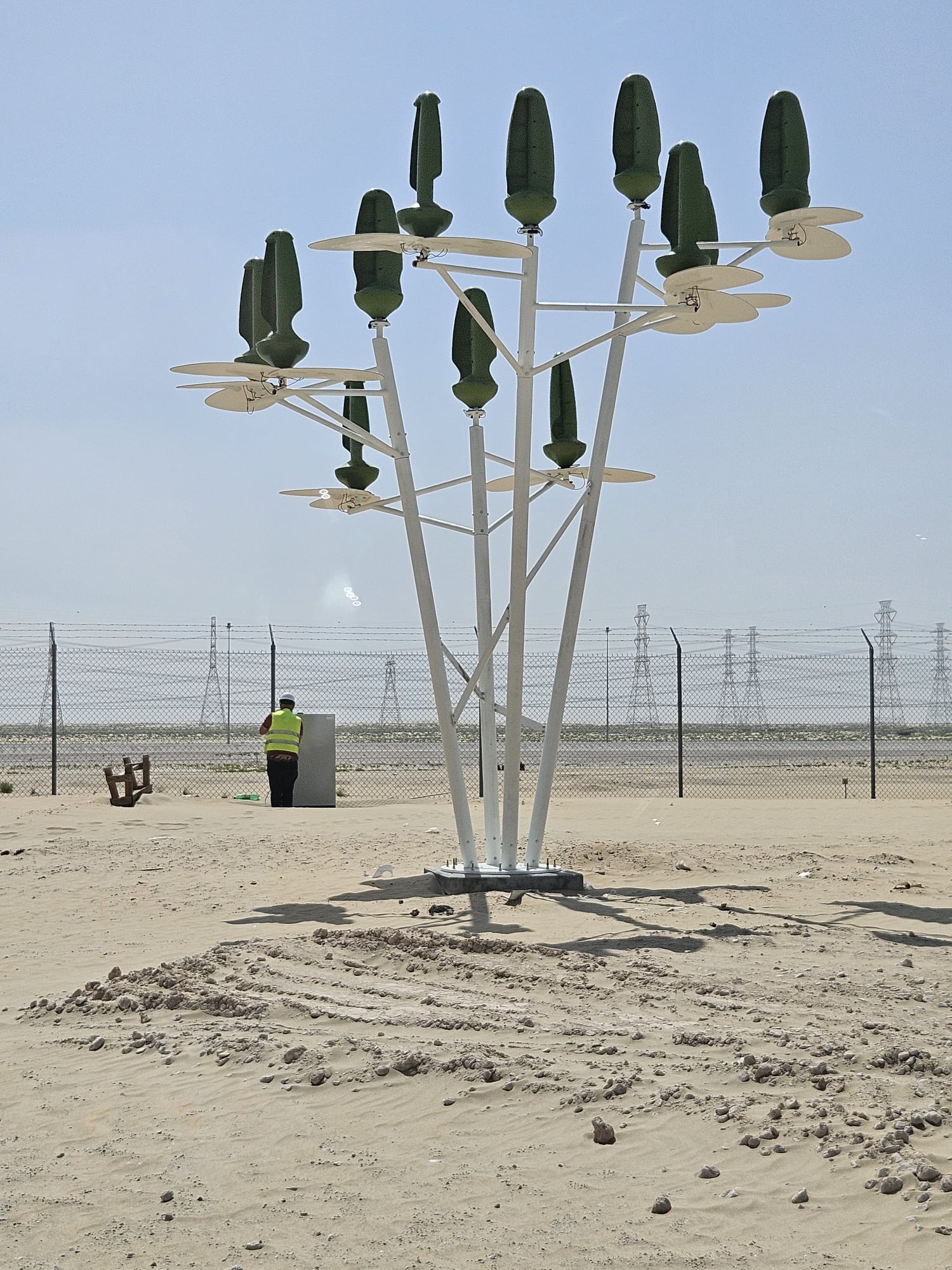
Hybrid WindTree installed on site
Visible local power infrastructure From distributed micro-generation to hybrid WindTree systems, production happens directly on site, where continuity, autonomy, and lower carbon intensity matter most.
How it works

From micro-generation to hybrid site infrastructure

Velox does not rely on a single configuration. It creates a local production stack, from lightweight distributed generation to more powerful hybrid infrastructure designed for exposed, isolated, or energy-sensitive environments.

Aeroleaf

Aeroleaf is designed for distributed micro-generation. It brings local production closer to the point of use, with a compact format that helps make clean electricity visible, modular, and easy to integrate into built environments.

It is particularly relevant when the objective is to multiply small production nodes across a site, create a visible sustainability signal, and build an energy contribution layer that supports broader resilience goals.

Hybrid WindTree

Hybrid WindTree moves from symbolic generation to meaningful site contribution. By combining wind and solar in one infrastructure, it broadens the production profile and creates a stronger local energy base for sites that need more than daytime-only support.

This makes it highly relevant for industrial sites, hospitality environments, ports, campuses, remote facilities, and any operational context where diesel dependency or grid exposure remains a structural issue.

336 W

Aeroleaf unit power

Compact distributed micro-generation designed to create visible, local energy contribution at the point of use.
5.4 kW + 432 Wc

Hybrid WindTree entry range

A first hybrid configuration combining wind power and solar contribution for local resilience and partial diesel displacement.
9.0 kW + 740 Wc

Hybrid WindTree upper range

A stronger hybrid configuration for sites where local production needs to play a more strategic operational role.
Important note on production Installed power expresses the production capability of the system. Actual annual electricity output depends on site conditions, wind regime, solar exposure, and operating profile. This page positions the infrastructure and its operational value; detailed annual yield is assessed per site.
Diesel replacement

Reduce generator runtime. Lower fuel dependency.

In many real-world environments, diesel remains the default answer to continuity. The strategic value of local generation is not to promise an overnight replacement of diesel everywhere, but to reduce part of diesel-produced electricity with a cleaner on-site source.

Operational logic

Every kilowatt-hour produced locally is one less kilowatt-hour that needs to be produced by fuel alone. This reduces pressure on the generator, lowers fuel exposure, and improves resilience in environments where energy continuity cannot rely on ideal infrastructure conditions.

  • Lower generator runtime pressure
  • Reduced diesel consumption over time
  • Lower exposure to fuel logistics and price volatility
  • More diversified on-site energy profile
  • Better continuity for exposed or isolated sites
The point is not all-or-nothing replacement. The point is meaningful diesel displacement through local clean generation.

Illustrative annual diesel-equivalent savings

As a practical operating assumption, diesel generators often produce around 3.5 kWh per litre. On that basis, each 1,000 kWh of local electricity can avoid roughly 285 litres of diesel.

  • Aeroleaf: illustrative contribution equivalent to roughly 100 to 200 L/year avoided, depending on site conditions and deployment density
  • Hybrid WindTree — smaller range: roughly 850 to 1,050 L/year avoided in illustrative operating scenarios
  • Hybrid WindTree — upper range: roughly 1,400 to 1,700 L/year avoided in stronger production scenarios
These figures are illustrative and should be refined per site. They are designed to express operational order of magnitude, not universal guaranteed output.
ESG & decarbonization

Visible decarbonized energy with reporting value

Local energy production is not only an operational lever. It is also a strategic ESG asset. It helps reduce carbon intensity, creates a visible sustainability signal on site, and provides a measurable basis for reporting, communication, and long-term transition planning.

Lower carbon intensity

Replacing part of diesel-generated electricity with local wind and solar contribution helps reduce the emissions profile of site operations and supports a more credible energy transition path.

Visible ESG commitment

Unlike invisible certificates or indirect claims, local infrastructure makes decarbonization tangible. It gives operators, investors, guests, tenants, or regulators something real to see and understand.

Measurable reporting basis

On-site production creates a concrete basis for reporting frameworks, internal dashboards, sustainability communication, and future intelligence layers linked to performance, carbon, or environmental analytics.

Strategic value beyond electricity Local generation does more than produce power. It strengthens resilience, improves ESG credibility, and lays the groundwork for future data, carbon, and operational intelligence layers.

Assess what local production could do for your site

From distributed Aeroleaf deployment to hybrid WindTree infrastructure, Velox helps organizations reduce exposure, improve resilience, and build measurable decarbonized energy on site.