Across Africa, three companies have quietly built one of the most extraordinary distributed infrastructure networks on the planet.
IHS Towers operates 39,229 towers1 across eight markets. American Tower Africa runs nearly 24,000 sites2 across seven African countries. Helios Towers manages 14,417 sites3 across nine markets.
Combined: more than 75,000 physical nodes, already deployed, already powered, already connected — stretching from Lagos to Nairobi, from Dakar to Johannesburg, from remote off-grid communities to dense urban centers.
This infrastructure is worth tens of billions of dollars.
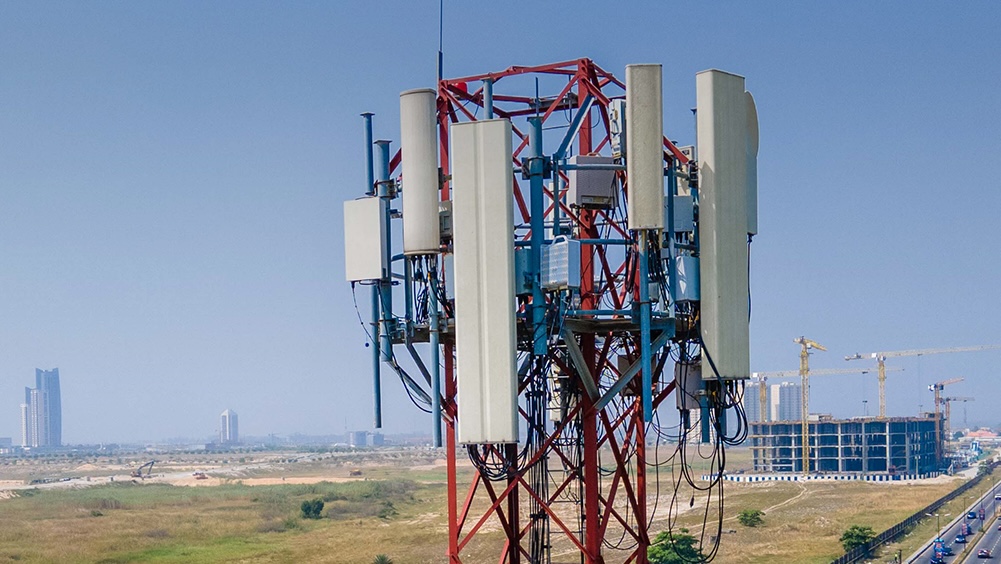
The recent announcement that MTN Group is acquiring IHS Towers in a $6.2 billion deal9 — announced on February 17, 2026 — underlines just how strategically valuable this infrastructure has become. Africa's largest mobile operator is buying back its towers. The logic: whoever controls the infrastructure controls the economics of connectivity. And the economics of that infrastructure are about to change significantly.
It is also, in its current form, significantly underutilized.
The cost structure problem
For towercos, energy is not a peripheral issue. It is one of the most significant and volatile components of site-level OPEX.
IHS Towers' own filings make the exposure concrete. As of December 2024: 41% of its sites run on hybrid power, 33% use grid electricity with backup generators, and 18% rely solely on generators4. The company explicitly names diesel monitoring and delivery as a critical operational dependency — one that introduces theft risk, logistics complexity and direct exposure to fuel price volatility.
This is not an IHS-specific problem. It is structural across the sector.
Diesel powers connectivity for hundreds of millions of people. But it also represents a cost that compounds with every market disruption, every currency devaluation, every fuel subsidy removal.
The operators know this. They have invested heavily in hybrid energy solutions — and those investments are working. But most towercos are still treating this as a cost reduction exercise.
That framing undersells what is actually possible.
The MTN-IHS deal makes this question even more urgent. By reintegrating tower ownership, MTN is taking direct responsibility for 29,000 sites' energy costs, carbon liabilities and operational performance. What was previously an arms-length cost shared with an independent towerco now sits directly on MTN's balance sheet — and directly on MTN's sustainability reporting obligations.
From passive assets to infrastructure platforms
Historically, towers have been positioned as passive infrastructure. Their value proposition is clear: host tenants, ensure uptime, generate predictable lease-based revenue.
Helios Towers is a good example of how well this model performs when executed well — its tenancy ratio now stands at 2.09x5, up from 1.81x in 2022, driving margin expansion and cash flow growth without adding significant new sites.
But there is a ceiling to this model. And beyond that ceiling, a different question begins to emerge.
What if the tower is not just a structure that hosts connectivity — but a node that generates value in multiple directions simultaneously?
The three layers most towercos are leaving on the table
① Energy savings — already happening, but still incomplete
Hybrid wind and solar systems reduce fuel consumption, stabilize costs and improve operational resilience. The numbers confirm it: ATC Africa has invested approximately $300 million6 in energy efficiency improvements across its African portfolio. IHS Towers reduced its Scope 1 and Scope 2 emissions intensity by approximately 11% in 2024 alone, and by around 20% since 20217.
This is real progress. But it is still primarily framed as cost reduction and ESG compliance.
What is often underestimated is that this transition is no longer theoretical. The limiting factor is no longer feasibility — it is execution at scale.
IHS Towers has already reduced diesel consumption by nearly 50 million liters through Project Green while generating more than $36 million in annual power cost savings8. This confirms that the transition away from diesel is no longer experimental. It is already economically viable at portfolio scale.
② Certifiable carbon credits — almost entirely uncaptured
Each kilowatt-hour of renewable energy that displaces diesel generation corresponds to measurable and certifiable CO₂ emissions avoidance — certifiable under the Gold Standard framework by an accredited third party.
As demand for high-integrity climate assets increases, the carbon layer alone could represent a meaningful additional revenue stream at portfolio scale — one that currently sits entirely uncaptured, waiting to be unlocked by the same transition that towercos are already making for energy reasons.
③ Environmental data — the most underestimated opportunity of all
This is where the framing shifts most dramatically.
A telecom tower is already a physical node in a distributed infrastructure network. It is powered. It is monitored. It has structural capacity. And it is located where the data is most valuable: in remote areas, in climatically exposed zones, in markets where ground-level environmental data is scarce, expensive or simply unavailable.
Integrating an embedded sensing layer — temperature, humidity, air quality (CO₂, PM2.5), wind speed and direction, atmospheric pressure, solar irradiance — at the site level requires minimal additional footprint. But it fundamentally transforms what the infrastructure produces.
The global market for climate data analysis was valued at $1.1 billion in 2024 and is growing at 32% annually — driven by the expansion of index-based insurance, regulatory mandates for climate risk disclosure, and demand for real-time environmental intelligence across agriculture, energy and public infrastructure.
The buyers are real and structurally motivated:
Insurers writing agricultural, infrastructure and property risk across Sub-Saharan Africa need hyper-local, continuous field data to price physical risk and reduce basis risk in index-based products. Regional or satellite-derived data is not good enough for the underwriting precision they need.
Governments and development agencies building climate MRV infrastructure need sensor nodes deployed where populations live and work. African towercos are uniquely positioned to provide this at continental scale.
Agricultural programs, urban planners and public health systems across the continent operate with environmental data that is years old and spatially coarse. Ground-truth data from a distributed tower network has structural commercial value that no satellite product fully replaces.
For towercos with portfolios of 14,000 to 40,000 sites, this is not a niche data opportunity. It is the foundation of a distributed environmental intelligence network — one that is already deployed, already powered and waiting to be activated.
Why scale changes everything
What makes towercos uniquely positioned is not just their exposure to the problem. It is their ability to scale the solution.
Operators working site by site face the full deployment and maintenance burden of each individual transition. Towercos operating at portfolio scale — with standardized infrastructure, repeatable operational processes and centralized monitoring capabilities — can aggregate the economics in ways that individual operators cannot.
The carbon opportunity that is negligible at a single site becomes a structural revenue stream at portfolio scale. The environmental dataset that has limited value from a single node becomes a proprietary, continental-scale asset that commands a very different commercial conversation.
This is what portfolio scale unlocks. Not just cost reduction at scale — value creation at scale.
The question worth asking
IHS Towers, American Tower Africa and Helios Towers have already built the most valuable distributed infrastructure asset in sub-Saharan Africa.
They have invested hundreds of millions of dollars in energy transition. They have the operational capabilities, the monitoring systems, the customer relationships and the geographic coverage.
The question is not whether they can capture this value. It is whether they choose to.
Right now, most towercos are asking: how do we reduce our diesel bill?
The better question is: what else can our infrastructure produce — and how much of that value are we currently leaving behind?
The infrastructure is already there. The network is already built. What is changing is the model used to extract value from it.
Sources
- IHS Towers Annual Report 20-F, SEC filing, March 18, 2025. ihstowers.com/investors
- ATC Africa press release, Business Wire, November 10, 2023. businesswire.com
- Helios Towers Q1 2025 results, Light Reading, May 8, 2025. lightreading.com
- IHS Towers 2024 Annual Report 20-F, March 18, 2025. ihstowers.com/investors
- Helios Towers Q1 2025 results, Light Reading, May 8, 2025. lightreading.com
- ATC Africa–Airtel Africa partnership, Connecting Africa, September 2024. connectingafrica.com
- IHS Towers 2024 Sustainability Report, May 2025. ihstowers.com
- IHS Towers 2024 Sustainability Report, May 2025. ihstowers.com
- IHS Towers / MTN Group merger announcement, Business Wire, February 17, 2026. businesswire.com